
The online business world loves to tell you to do more. Raise your prices. Build a massive course. Stack on bonuses. Charge five figures or you're doing it wrong.
But what if the best move for your business was actually the opposite?
That's exactly what Cass, copywriter, email marketing strategist, and founder of The Copywriting Mama (now a trademarked brand, congrats Cass!), discovered when she stopped chasing the "big ticket" model and started building a business around what her clients could actually afford, what she could sustainably deliver, and what created real, lasting relationships.`
Or listen on your favorite platform: Spotify | Apple Podcasts | Amazon Music | YouTube
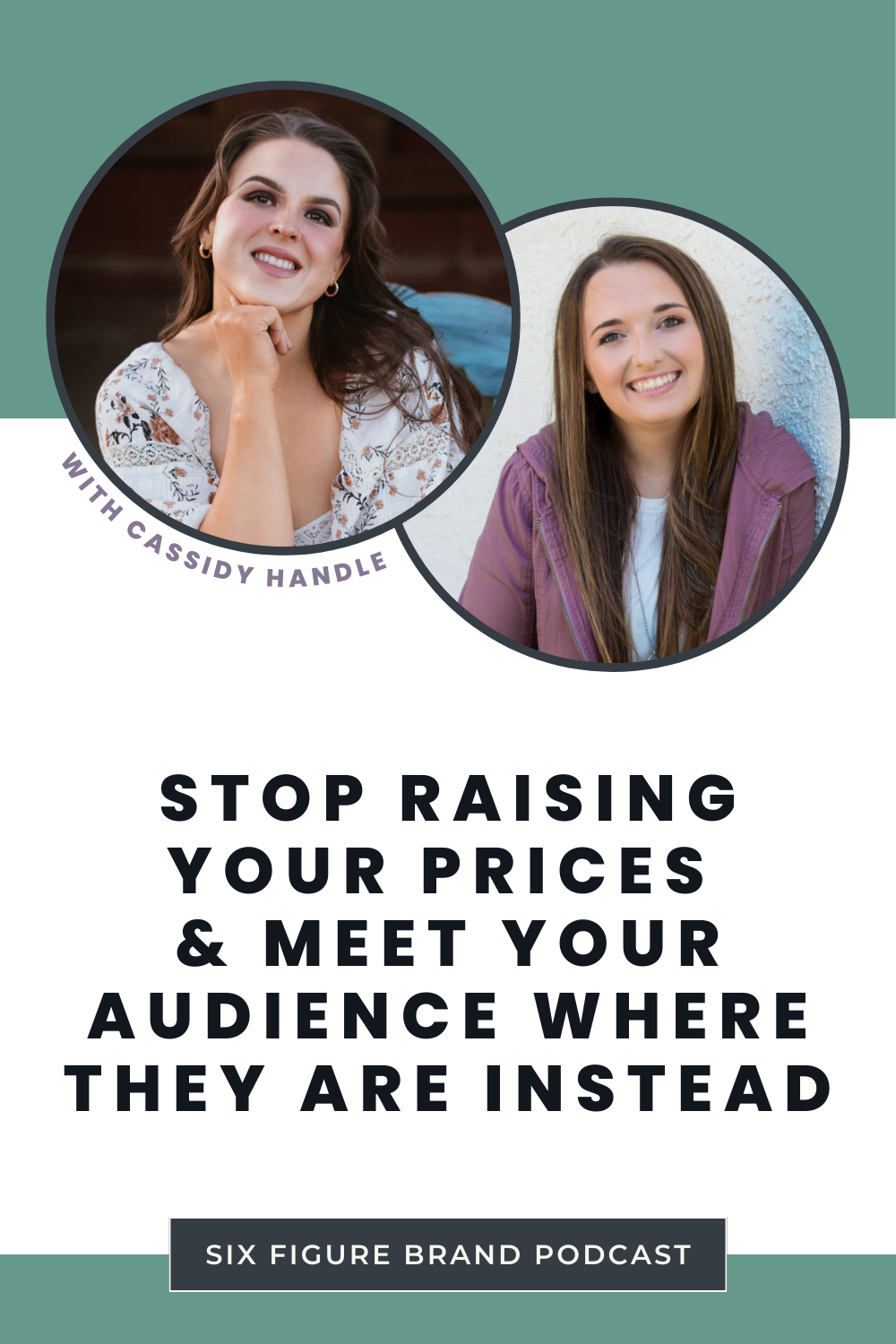
How Cass Got Started: She Got Fired
Cass didn't plan to become a copywriter. She got fired from a podcast management job just two days after moving into her new house and had to figure out something fast.
She remembered an old boss once telling her she'd make a great copywriter, so she went to YouTube, started learning, and eventually landed her first client on LinkedIn 28 days later. From there, she moved to Instagram and started building her brand as The Copywriting Mama.
In the beginning, she took any writing project she could get: brand messaging, website copy, blog posts, all of it. But over time, she realized she wanted to be the best at one thing rather than a jack-of-all-trades. She landed on email marketing, which is short-form, results-driven, and as she puts it, very ADHD-friendly.
Why You Should Let Your Niche Find You
One of the most refreshing parts of Cass's story is that she didn't pick her niche on day one. She experimented, took on different projects, and let her niche emerge organically.
This matters because so much online business advice tells you to niche down immediately, before you've even done a single project. That pressure can push people down the wrong road, forcing a specialty that doesn't actually fit.
Cass originally thought she'd want to focus on website copy, since it seemed the most lucrative from the outside. But once she started doing the work, she realized those projects were long, emotionally intense, and required brand messaging to do them well. Email, on the other hand, was snappy and repeatable, a much better fit for where she was in life as a single mom running her business solo.
The lesson: take on work, notice what you love and what drains you, and let that guide your niche over time.
She Lowered Her Prices and Booked Out Almost Immediately
Here's where things get interesting. While the internet was shouting "raise your rates," Cass went the other direction. She lowered her prices and almost immediately filled her roster.
Why? Because she stopped trying to land the big whale and started thinking about the lifetime value of a client relationship.
Her retainer model means clients pay a smaller monthly amount, but they stay. Her current retainer clients have been with her anywhere from six months to over a year. When you multiply even a modest monthly rate by 10 or 12 months, it adds up, and it's far less exhausting than constantly hunting for the next big project.
This is the difference between transaction value and lifetime client value. One $5,000 project sounds great until you realize you have to find another one the moment it wraps up. But a $700/month retainer that renews month after month? That's a sustainable business.
Why More Work Doesn't Equal More Money or More Happiness
Cass learned this the hard way. She once had 13 clients in a single month, and it was the hardest month in her business. She had over-promised, was scrambling to deliver, and her first almost-$10K month didn't feel like a win because so much of the money went toward support and keeping up with what she'd promised.
The takeaway: more clients, more deliverables, and more bonuses don't automatically mean more profit or more joy.
This applies to how you price and package your offers too. Piling on extras, like throwing in a free email header or a bonus graphics set, doesn't actually make clients happier. It overwhelms them and buries you. A simple, clear deliverable with a clear outcome is far more powerful than a bloated offer with a hundred bells and whistles.
Build offers you actually enjoy delivering. If you're building something you resent, you didn't get into self-employment to be miserable.
Stop Building Offers That Make You Miserable
You're allowed to say no to work you're capable of doing but don't want to do.
Cass is completely capable of writing website copy. She's good at it. But emotionally, those long, high-stakes projects just aren't where she wants to live right now, so she let that service go, even though there's real money in it.
The same principle applies to your ideal client. Just because you can help someone doesn't mean you should or that they're the right fit for your business. Cass has intentionally shifted her messaging to attract "socially successful brands," clients who are already doing well and need email marketing to act as gasoline on an already-burning fire. She doesn't want to jump on a sinking ship.
If your messaging speaks primarily to pain points and desperation, you're going to attract desperate clients. That means more pressure on you to "fix" their business and a higher chance of burning out trying to rescue something that may not be saveable.
The Foundational Work Most Service Providers Skip
Before you hire a copywriter or a designer, there's a step that most people skip entirely: brand messaging and brand strategy.
Cass is firm on this. If you hire a website copywriter before you've done brand messaging, you're building on a shaky foundation. A good copywriter can't write compelling website copy from a questionnaire. They need to understand your voice, your values, your ideal client, your differentiators, all the deep stuff that only comes out of a real brand messaging process.
Brand messaging isn't just your one-liner or elevator pitch. It's a comprehensive foundation that guides your website copy, your emails, your Instagram captions, your sales pages, everything. If you skip it, you'll likely find yourself redoing your website in a year because something still feels off.
The same goes for brand strategy and design. A beautiful logo built on guesswork about your audience and positioning will look fine, and then feel wrong in 12 months when your business has grown past it.
Do the foundational work first. It costs more upfront, but it saves you time, money, and frustration down the road.
How to Test Your Messaging Before You Spend Money On It
Here's a practical framework for testing your messaging before you commit to expensive deliverables:
1. Threads is the lowest-stakes testing ground. Post a thought, see if it resonates. If it gets comments and traction, you know people care about it.
2. Instagram is a slightly higher-effort version of the same test. If something performs well here, you have more data that your message is landing.
3. Email is where Cass takes ideas that have already proven themselves on social. She won't write an email about something that flopped on Instagram, because her list has given her exclusive access to their inbox and she doesn't want to waste it on content that didn't connect.
4. Website copy sits at the top of the pyramid. This is where your most proven, refined messaging lives. Don't start here.
What You Actually Need Before You Start Email Marketing
If you've been putting off building your email list, Cass has a simple answer for when to start: when you have one person to email.
You don't need 500 subscribers. You don't need a perfectly designed newsletter. You need:
A proven offer, meaning something people have actually paid for or expressed real interest in
Messaging that's already getting traction on social media, because if nobody's engaging there, they won't open your emails either
An opt-in that pre-qualifies your ideal client
On that last point, Cass's primary email list growth comes not from a lead magnet, but from marketing the value of her newsletter, The Inbox Revival, directly. She tells people exactly what they'll get, and that clarity alone drives more opt-ins than her freebie does.
Her freebie, 75 punchy and personality-driven subject lines, is also a pre-qualifier. The people who want it are exactly the kind of brands she wants to write for.
The Truth About Lead Magnets: Keep It Simple and Make It Useful
The era of the giant PDF checklist opt-in is over, or at least it should be. Nobody needs another 20-page guide they'll never read just to get on your list.
Cass's 75 subject lines freebie is a Google Doc. Plain text, no fancy design, and that's completely intentional. Her audience is going to use those subject lines, and copy-pasting from a beautifully designed Canva PDF is a pain.
The point of a freebie isn't to impress people with your design skills. It's to give them something genuinely useful that also signals who you are and who you serve.
Test your lead magnet before you invest hours making it pretty. If it gets traction as a Google Doc, then dress it up. If it doesn't convert, you just saved yourself a lot of time.
Why How You Talk About Clients Online Matters More Than You Think
Cass is vocal about something that doesn't get talked about enough in the online business space: how you talk about your clients online says everything about you.
Complaining about clients on Threads, calling out a no-show before their appointment slot has even ended, or venting publicly about a bad experience might feel cathartic in the moment, but it costs you. Potential clients are scrolling through your posts and watching how you handle conflict. If you'll talk that way about a stranger, why would they trust you with their business?
Her rule: take it up with the person directly first. Have the one-on-one conversation. Most issues can be resolved without an audience. And if something truly egregious happened and you feel it needs to be made public, choose your words carefully, because the way you say something matters just as much as what you're saying.
How to Build a Sustainable Service Business Without Burning Out
The internet's playbook of more bonuses, higher prices, and bigger launches works for some people. But it's not the only way, and for many service providers, it's not even the best way.
Cass built a sustainable, profitable business by:
Letting her niche emerge naturally instead of forcing it
Lowering her prices to attract better-fit, longer-term clients
Building a retainer model that prioritizes lifetime client value over one-time transactions
Keeping her offers simple, clear, and enjoyable to deliver
Doing the foundational brand messaging work before anything else
Testing her messaging before committing to expensive deliverables
Building her email list with pre-qualifying opt-ins rather than chasing big numbers
The hamster wheel of "get a client, finish a project, find the next client" is exhausting. A business built on deep relationships, repeat clients, and offers you actually enjoy delivering is something you can actually sustain.
🔗 Links & Resources Mentioned In The Episode:
➡️ Follow Cass on Instagram @thecopywritingmama
➡️ Follow Morgan on Instagram @spechtand.co
➡️ Book Your Stand Out Brand Strategy Session (use code SFBPOD for $100 off)
➡️ Book A Brand Chat
🎧 Listen to episode 61 of The Six Figure Brand Podcast on Spotify, Apple Podcasts, Amazon Music, and YouTube
